I ended 2024 stating that of the 2024 releases that I watched, my top five were
- The Judge from Hell
- Good Partner
- Knight Flower
- Jeongnyeong: The Star is Born
- Queen of Tears
But all that has changed now that I’ve watched A Shop for Killers.
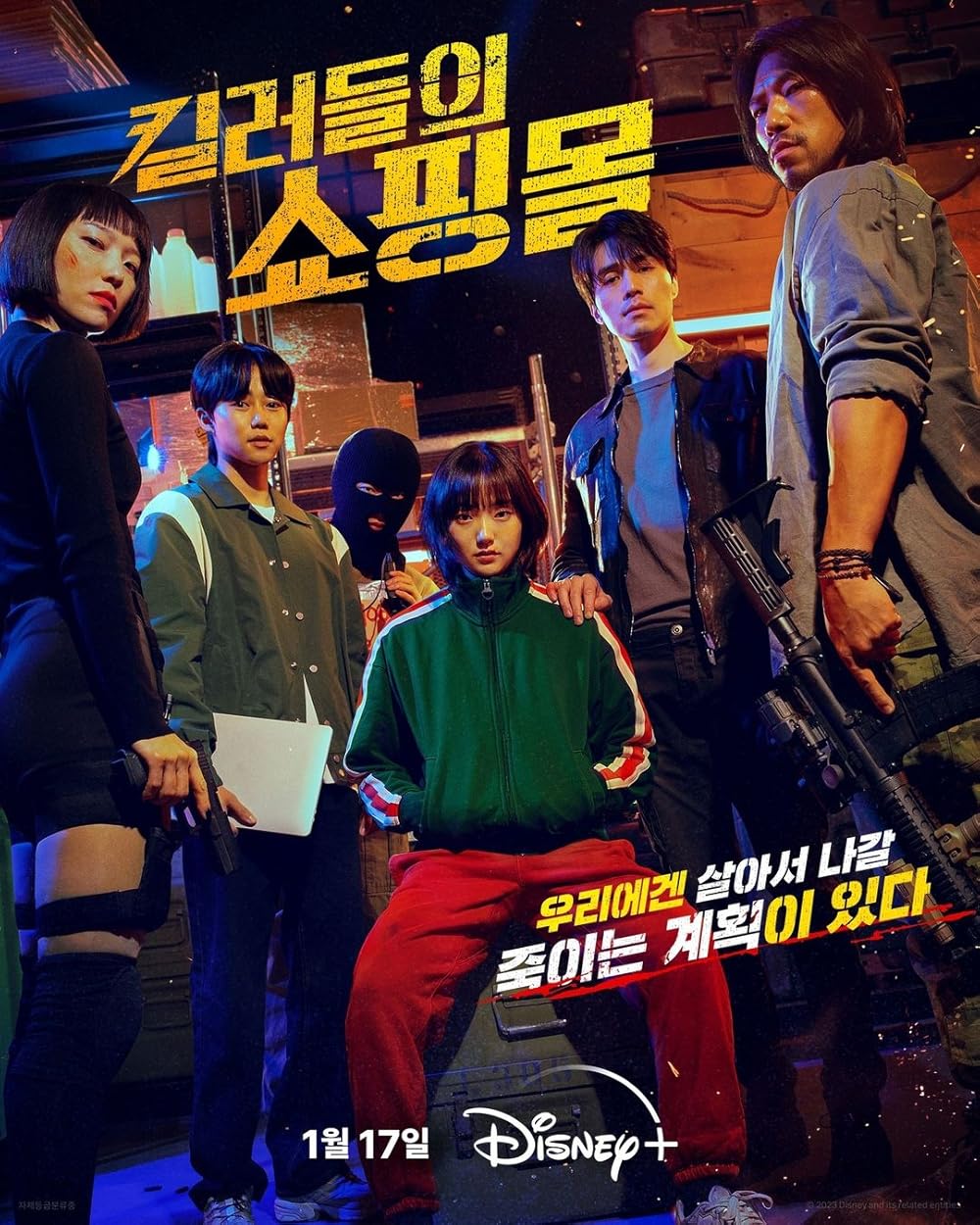
I think this show is criminally underrated because I haven’t seen the hype behind this show as much as others in 2024. But this was my favorite show of 2024, if not one of my favorite K-dramas.
A Shop for Killers stars the unnaturally handsome Lee Dong-wook as Jeong Jin-man and Kim Hye-jun (most known for her role as Queen-consort Cho in the historical horror show Kingdom) as his niece Jeong Ji-an.
Premise
Ji-an lives an everyday life with her grandmother, mother, and father until her uncle Jeong Jin-man suddenly appears one day. She’d never met him before. Following his appearance, Ji-an loses both her parents and her grandmother in a matter of a few days. Ji-an is left to the care of her uncle, Jin-man, and together, they live in a house in the country near a military base. Ji-an finds her life with her uncle a bit peculiar: he constantly teaches her to defend herself, he is a loner, and she feels that instead of just living with him, her uncle is keeping her, in a sense, locked up and away from, what she doesn’t know.
Ji-an moves out and begins to live her own life when, unexpectedly, her uncle dies. In the wake of his death, she learns that her Uncle Jin-man runs a strange and dangerous business, an online shopping mall for contract killers. She has now inherited this business and must learn about her uncle’s marred past and this perilous business simultaneously.
Plot & Pacing
I have seen many 8, 10, or 12-episode K-dramas; it seems to be the trend, especially for dramas made exclusively for American platforms such as Hulu and Netflix. Despite the rising ubiquity, I haven’t seen it done well. Some shows will follow a storyline and, in the last episode, add a new character that would add more depth to the show if there were only a few more episodes. Some thrillers will spend most of the show leading the audience to believe that character A is the killer only to learn that it was character C the whole time, even though having character C be the villain leaves gaping plot holes. Some will introduce a character in the beginning and make the audience feel like this character is essential, only to never hear about the character again, and you sit there like, what was the point? Some plots leave plot points or characters purposely ambiguous in hopes of having a second or third season, which is the standard in American TV. Most K-dramas are one-and-done and the ones that tack on a second season or aim to have a multi-season show fall short.
But this was the tightest written eight episodes I have ever seen.

From the first episode, the viewer has these questions:
- Why is Ji-an under attack?
- Should she trust her friend, who is also in the house while she is being attacked?
- Who is the badass woman who is helping Ji-an?
- Who are these people trying to kill Ji-an?
- How did her Uncle get wrapped up with these people?
Then, as the show progresses, you get the answers to those questions. These answers are told in flashbacks, but the flashbacks are done effectively.
New questions arise, of course:
What was Jin-man’s life before Ji-an, and is Jin-man really dead?
But in eight one-hour-long episodes, each question is answered. By the end of the show, you know all the who, what, when, where, why, and how of the plot, and the ending leaves the possibility of a second season, which there will be. But if there never was a second season, the show’s last episode gives you closure.
You wonder what happened to helpful characters such as Paisin and Min-hye (the badass woman I spoke of earlier) but you are okay if you never learn anything about them.
You understand each character’s motivations, and the plot is moved along through character decisions, not just because. It is a character-driven plot, and you can feel it in each episode.

It is fast-paced, and you can feel like you are getting all this information at once, but it is purposefully done; you are almost in the position of Ji-an, who is learning everything all at once as well.
Acting
Top tier. Not giving too much away, there is a character, Bale, who is the cause of Ji-an’s childhood suffering. The actor, Jo Han-sun can play crazy in the eyes so well. I mean, you hate the man and are afraid of him like the characters.
Another killer, Lee Seong-jo, is ambivalent, which is the worst personality you can have for a contract killer. The actor who plays him, Seo Hyeon-woo, can convey the character’s laissez-faire attitude about death and killing so well that when something terrible finally happens to him in the show, you are like good riddance but also, eh. You mimic his attitude back to him as a viewer.
Casting

All the actors fit their characters well. I will say I am happy to see Lee Dong-wook act in shows like this and Bad and Crazy, where he still gets to be the hero, which befits his face, but he is not this over-the-top good boy lead like he is in romantic K-dramas such as Goblin and Tale of the Nine-Tailed. All the actors fit their roles very well and acted the heck out of those roles.
Characterization
As I stated, the plot of A Shop for Killers is character-driven, meaning that the characters have been well thought out. All major characters have personalities, habits, backstories, and motivations and make decisions within the show based on these factors. Even if you don’t get to see those backstories through the show, the writers have creatively found ways for the audience to learn about who these characters are.
Let’s go back to Lee Seong-jo, who the audience assumes is the main villain in the show. We learn, through the character, that he is an orphan with no family, which, in his own words, influences his ambivalence toward killing. The people he kills, of course, have families, but he can’t empathize with that because he doesn’t have one himself. But to him, his mercenary crew is his family, and he holds that sacred. In reality, he enjoys killing but feels a bit of guilt. To absolve himself of that guilt, he offers hollow prayers and blames his lack of caring on his lack of family. But his ambivalence towards killing helps push the plot because he enables the true killer of the show, Bale, who is not afraid to say, “I love killing; it brings me great joy, and I will remove anyone out of my way who tries to make me feel guilty.”
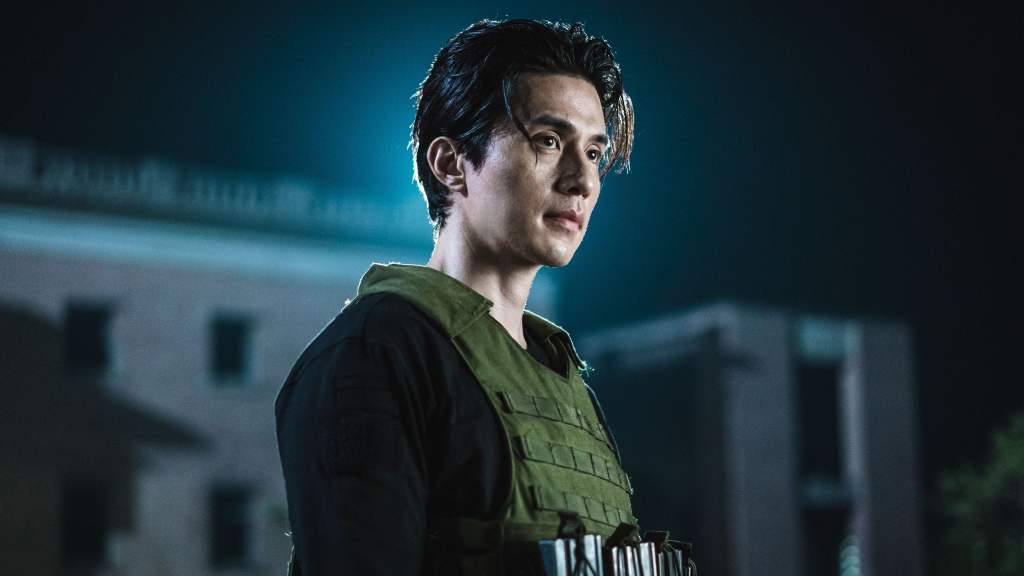
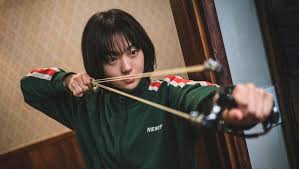
Finally, there is the character of Ji-an. Ji-an goes on a sort of hero’s journey. Her journey is hilly. She doesn’t just, all in one swoop, gain the ability to fight her enemies. She has moments where she is courageous and smart during the show but has moments when she falters and you, as the audience, yell at the screen at her in exasperation. It is a realistic portrayal (within a semi-unrealistic setting) of a person who has to quickly learn her own strength. You root for Ji-an and wonder during the entire show, “Would I be able to survive if I was in her shoes?”
Costumes
I once was an extra on a TV show, and there were two days of filming. I had to wear the same outfit those two days. Filming for both days was about 12 hours, maybe 14, I can’t remember. Anyway, it is safe to say that I was not looking forward to putting that same outfit on again for another day. The characters wear the same outfit for most of the show, particularly Ji-an.
Costumes help tell a story, and in Ji-an’s case, her costume perfectly portrays how she was caught unaware. It’s a random lounge-around-the-house outfit, and she literally has to learn to make do with what she has, outfit and all.
Setting
Most of the show takes place in what turns out to be the fortress of a house that Ji-an has lived in for 10 years. Underneath the house is the shopping mall, full of an extensive Amazon-like inventory of the latest and greatest weaponry. The house itself becomes a weapon and also a demonstration of Jin-man’s care for his niece. Yes, he wants to protect his inventory, but he knows he really has to protect Ji-an from his lifestyle. The house becomes almost a stand-in uncle for Ji-an as she fights for her life from episode 1 to episode 8.
Tropes
This was pretty trope-less. The only significant trope is a typical bullying scene when Ji-an moves to her new town with her uncle. Ji-an is bullied in elementary school and remains ostracized from the rest of her peers until her high school graduation.

Product Placement
If there were product placements, it would only be for the efficiency of Korean-style funeral homes. Oh, and if it is your thing, weapons.
OST
I can’t remember if there was a good song, but the show’s sound effects and sound editing were terrific.
Conclusion
Watch this show! It is incredibly violent and fairly graphic with said violence. But the overall story is so well written. It is based on a book, and I am inclined to find a translated version to read the story.



 They Don't Kiss Until Episode 16
Leave a comment