
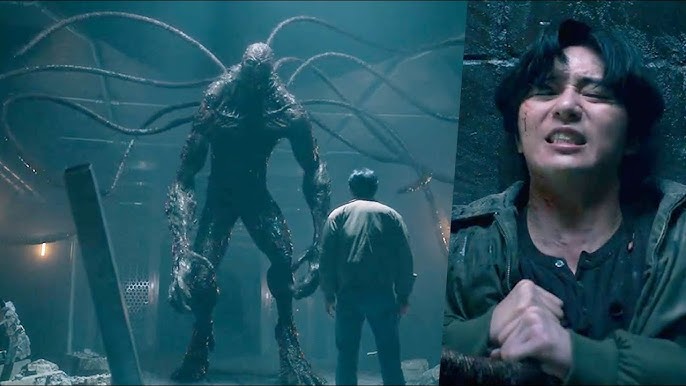
Where do I begin with my disappointment in Season 2 of Gyeongseong Creature? I was disappointed in the first season, which, with only ten episodes and a relatively underdeveloped storyline, can we even call it a season? However, with season two, I must say I wonder what the executives at Netflix are doing. Let’s dive into this show.
Casting: 5/5
Casting goes without saying was done well for season one and season two. Park Seo Jun plays the haunted yet seemingly blasé male lead very well. Claudia Kim pulled off playing the villain Lady Maeda well.
Acting: 5/5
As stated, the actors acted in this very well. Nothing felt over the top or unnatural. Honestly, hats off to Claudia Kim, who took Maeda from season 1 to season 2 and made her feel as miserable as one would expect a person who has been alive for over 100 years. Lady Maeda appears stoic, but underneath, she is roiling with cruelty, pain, and misery, and Claudia Kim gets the emotions across the scene. All the other actors did their parts as well and worked with the script the best they could, but for the few scenes we see her, Claudia Kim’s portrayal of Lady Maeda in 2024 and 1945 stole the show.
Costumes: 3/5

I didn’t like Park Seo Jun’s hair this season, I prefer him with a close cut. In season 2, he radiated that understated sexy that fits his character. Then he had this fluffy hair, and in the last episode of season 2, he was back to his close cut. The costumes for season 1 were terrific; it was a historic show. The costumes in season 2 were dark and black, or stark white, befitting a biotech firm conducting human experimentation. Han Soo Hee’s character, Yoon Chae-Ok, could have been styled differently. Still, she was dressed as a woman who has wanted to stay under the radar and is essentially depressed, thinking that all the people she has known and loved are dead and a person who is afraid to make any further human connections. Nonetheless, the costuming felt stereotypical and didn’t add any flavor to the characters.
Tropes: N/A
I think tropes are the best part of K-dramas. I live for the tropes. None were to be found. I think Netflix purposely tries to avoid having tropey shows for their originals. I will leave this out of the rating.
Product Placement: N/A
I didn’t see any. Maybe there were some that I just didn’t catch. Once again, I love the random moments of product placement in K-dramas. I like to see if I can buy what they are advertising. This is how I got hooked on Maxim Mocha Gold Mild (those yellow instant coffee sticks), but there were no product placements in season 1 or 2. Maybe it was subtle.
OST: 2/5
One of my favorite parts of season 1 was the haunting opening credits and song. There was a little something for season 2, but the effort and care put into the OST for season one was not there at all for season 2. It is like they just created a little ditty that sounded a bit like season 1 but didn’t care to put any effort into it because they knew that we knew that this season was a cash grab. The OST for season 2 should have been an indicator of what little effort was put into writing the plot of season 2.
Plot: 2/5
Now, how did we get here?

First, the show’s concept, especially for season 1, was an excellent idea. Japanese military experimentation on Korean people was a historical fact. Using a typical sci-fi trope of a parasite and a serum to amplify the so-called benefits of the parasite bonding with the host is a good way of exploring “the monsters inside of us” theme. Season one had a good beginning and middle, with the end purposely vague. I didn’t like the marketing surrounding season one, i.e., splitting up an already short season into two parts, but it still was an interesting enough show. I would give season 1 a solid three out of five, maybe even a 4, if some of the issues presented in season 1 had just been addressed in season 1, leaving only one or two cliffhangers for season 2. Instead, there were four very big threads left hanging in season 1. Here are the things that were left to be sorted on in season two.
- Myeong-Ja’s baby
Part of the two-part split of season one was figuring out which of our heroes accidentally ingested the parasite in a sitting cup of water, which was left out. Why would anyone drink water in a hospital basement with human experimentation going on? I don’t know, but it was in an innocent-looking teacup, so there you have it. Anyway, we realized that Myeong-Ja had a parasite inside her and that parasite transferred to her baby. When Colonel Kato forcibly gives Myeong-Ja an unmedicated C-section, we see her child, whom I like to call Baby Creature, looks to be essentially half parasite, literally. One of his eyes is a weird grey color, and his other eye is a standard human brown color. How did he come out this way, and why? Why was this case of implantation different, and how does Kato plan to use the kid?
- Yoon Chae-Ok
At the end of the show, we know that the Creature accidentally kills Chae-Ok and, in grief and a desire for her to live, voluntarily expels her parasite for her daughter to live, and the parasite does implant itself successfully into Chae-Ok. What happens to Chae-Ok? How does she survive? Does she reconnect with Tae-Sang, whom she essentially died for?
- Ho-Jae or Tae-Sang
After the credits roll at the end of the first season, we get a little Marvel-esqe peak into what we assume will be season two. We see modern-day Seoul and a young man named Ho-Jae looking out the window, looking very much like a 1945 Tae-Sang save for the hair, with an interesting and mysterious scar on the back of his neck. Is this Tae-Sang? If so, that means he has the parasite, but at the show’s end, we know he never ingested one. Is this a descendant of Tae-Sang? We need to know.
- Lady Yukiko Maeda
Probably the most interesting person in the whole show is Lady Maeda, and that is because we learn in season one that while Dr. Ichiro and Colonel Kato were conducting a host of human experiments, it was Lady Maeda who was the financial and possibly creative backer. She didn’t silently fund; she made sure to know exactly what was happening in the basement labs and dungeon of the hospital. Moreover, Lady Maeda purposely kidnaps Myeong-Ja, as Commissioner Ishikawa is her husband. But the most significant OMG moment is when the audience discovers that Lady Maeda knows Chae-Ok’s mother, who she calls Seishin, and that Lady Maeda purposely had Seishin kidnapped to be placed in the hands of Kato and Ichiro. What?! Chae-Ok doesn’t know Lady Maeda, but Lady Maeda seems to know her as well. A lot is going on with this character that needs to be fleshed out. What is her obsession with Tae-Sang? It is hinted that she feels he has betrayed her, but betrayal is very personal. From the standpoint of Tae-Sang, their relationship is business, but perhaps she has felt more. What about Kato’s work intrigues her? It seems that Ishikawa had some idea that general human experiments were going on. The kind of experiments oppressors do to see if the people they are oppressing are really humans: do they feel pain, are their organs different, etc? But he was overwhelmed with the Creature that was created, so what in Lady Maeda’s life gets her to this point where she doesn’t have any real remnants of her humanity? But the most interesting thread to follow in season two is Lady Maeda’s relationship with Seishin and Chae-Ok. What happened between these two? What could this woman have possibly done to deserve to be ripped away from her family, experimented on, brutalized, and turned into a literal monster? Also, Kato offers the parasite to Maeda after she survives but is severely injured from an assassination attempt. Does she take it?
But guess what? We don’t get this information. We get such an underdeveloped plot designed only to show fight scenes, and that’s it. Let’s talk about these plot failures.
Plot Failure #1
Chae-Ok and her life following becoming a parasite-host. We learn that she survives the implantation, and in due fashion, as is the nature of the parasite, she initially has an insatiable hunger and kills what looks to be a whole village. She wakes up out of her stupor and is horrified by her actions. Then we learn that she has been living in the shadows all this time but doing much of what she was doing in the 1940s, finding missing people.

We also learn that Tae-Sang is Ho-Jae. He goes by the name Ho-Jae now, but he is Tae-Sang. Ho-Jae runs a private investigation firm in the same building as the House of Golden Treasure. In 1945, Lady Maeda, upset with the failed assassination attempt, decides to jump Tae-Sang, have him stabbed to near death, kill all the employees except for Mrs. Nawol, who she leaves for dead, and force the parasite into Tae-Sang. Tae-Sang awakes, finds his employees slaughtered, and, with her permission, realizing what has happened to him, eats Mrs. Nawol. So, Lady Maeda has now taken away Tae-Sang’s woman, his adopted family, his business, and his freedom, and she is satisfied.
Here is the plot hole: Tae-Sang and Chae-Ok are both alive. And they seem to have never left Seoul. Both are good at finding people. How is it possible that these two people have never once crossed each other’s paths until one night in 2024? HOW?! Now, I get Tae-Sang, he believes Chae-Ok is dead. Everyone thinks she is dead. But there is a mini hole there. How do 20-30 people we’ll underestimate and say it was only 15. How do 15 people get killed in the manner that the parasite kills, and no one takes notice, and word doesn’t spread. That alone would cause Tae-Sang to believe that Chae-Ok was alive and go looking for her. But we didn’t see that type of storyline that dives deeper into a character’s mindset.

Moreover, Chae-Ok never once hears about the great Master Jang being brutally attacked and all the employees of the House of Golden Treasure being murdered. In season 2, we see that Tae-Sang hasn’t hid that he was once Master Jang. Some people know who he is and what happened to him, but Chae-Ok, living in the same city for 79 years, never once catches wind that her man is alive, just like her. She checks on him once immediately after surviving the parasite and getting herself together but doesn’t go to check on him anymore after that. Does she leave the city? Does she leave the country? How is it that she, with all her love and missing him, never once checks back to see how he is doing? To see how he has aged. To see if he needs some kind of help. Nothing. In 79 years! That doesn’t make sense. Yes, Chae-Ok is a no-nonsense woman, and she was probably really depressed and in her feelings about everything that took place, but in 79 years you don’t want to see what your old beau Tae-Sang is up to. I mean, really, they should have reconnected immediately after the Korean War. This aspect of the plot just doesn’t make sense.
Plot Failure #2
Somehow, Kato, with the help of Lady Maeda, who, by the way, ingested the parasite, continued the work Kato began and created a biotech firm at the same site where Onseong Hospital was. The dungeons and the basement labs are still intact. This plot point presents several questions that writers, producers, etc, seemingly chose to just deus ex machina us.
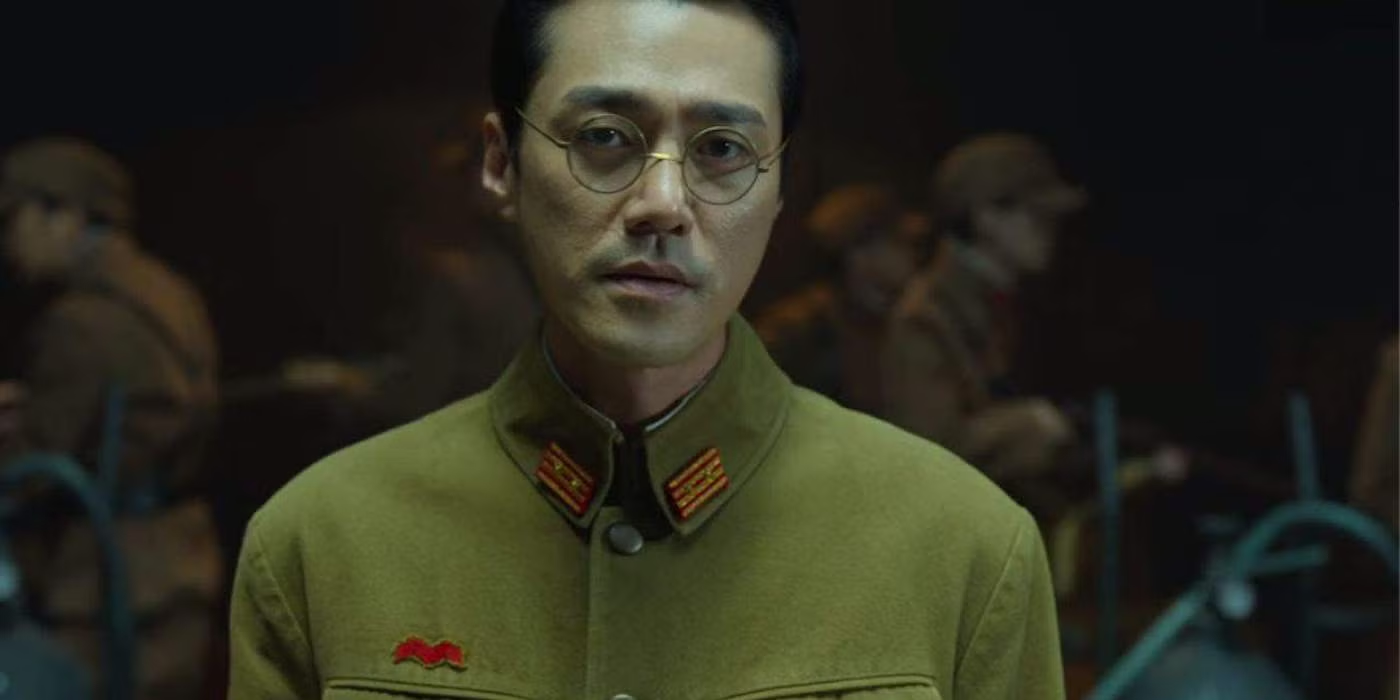
How did a former Japanese colonel establish a business in post-occupied and post-war Korea? Why not in Japan? Was it purely because they wanted to experiment on Koreans, driven by racism and ethnocentrism? Did Kato assume a new identity, a Korean identity? These questions about the historical context of the show’s narrative are intriguing and invite further exploration. In real life, journalists and scholars constantly follow stories that are well-known among the people but aren’t documented in the annals of history. That is how the show opened in season one. There had been talk of mysterious disappearances and not finding the missing. How did a destroyed and exposed hospital in 1945 become the new site of a biotech firm, and people do not talk about it? How are there not whispers on the ground of, you know, “That is where that hospital used to be.” I mean, a woman knows that Ho-Jae is Master Jang because she was a little girl back then, and she knows her grandson got a job at the Jeonseong biotech firm, the same company Ho-Jae has been fighting. I know he had to put the word out to stay away from Jeonseong. Yet, here is this woman, excited that her grandson is employed there? Like this character, the grandmother seems to know what is going on yet somehow is oblivious and then knows what’s happening again. What? How are people not suspicious of this place?
So much could have been written about this biotech firm, which is a creative way to continue to mask the experiments with this parasite within the story. However, exploring political corruption would have been a good jumping-off point. Remember, many K-dramas explore Japanese occupation and remind audiences that the Japanese were able to do what they did with the help of wealthy Koreans who further enabled them. So what does that look like in 2024? Is the biotech firm also getting money from foreign governments? They could have written scandals from within the company that threatened to expose the company. For characters, they could have introduced an entrepreneurial journalist who decided to trace the threads of a series of deaths of former employees that spanned decades and not just one year (because with what is happening in the biotech firm, there would have to be more suspicious deaths related to the company). There could have been a character introduced that is a new employee, like an actual employee who doesn’t work in the dungeon labs but in the so-called legitimate work of the biotech firm (is there legit work Jeonseong does? We needed to know this) who somehow stumbles across the experiments and the creatures in the bottom and tries to expose it all. We could have been introduced to a corrupt politician who comes from a long line of corrupt Korean politicians, and this politician knows about the experiments because he wants to use the Spider Ninjas. In fact, a powerful, greedy politician would have been a great counter to the maniacal Lady Maeda. Season two really could have explored the theme of who is a monster and who isn’t by looking at the political, social, and economic systems in place that allowed for Kato and Maeda to start this company seemingly unquestioned officially and unofficially.
Moreover, the season could have explored what happens when absolute powers corrupt absolutely. But that is not what we got. We got a violence fest.
Plot Failure #3
In addition to the lack of story development around Jeonseong Biotech, we learn that for a good portion of the additional 79 years that Tae-Sang/Ho-Jae has been alive, he has been fighting Jeonseong, Kato, and mainly Lady Maeda. Once again, back to Chae-Ok, how can Chae-Ok, seemingly still living in Seoul for the past 79 years, not realize that something shady was going on at the same location where her mother was locked up and turned into a monster creature? I would have been keeping track to make sure that something like this wouldn’t happen again. I mean, what has she been doing for nearly 80 years? How do you spend almost 80 years finding people and not have some ear to the ground about these experiments? Did she just assume that Lady Maeda died? That Kato died? She knew that Myeong-Ja had the parasite inside her, did she not wonder about the unborn child? Did she do no further inquiry on this whole experimentation mess? It doesn’t make sense. This plot point doesn’t make sense.
Plot Failure #4
We needed to understand more about the parasite. In season one, there was only the Creature. No other people had survived implantation and the serum shot. Seishin did. It would have shown respect for the audience and allowed them to explore more deeply how Seishin voluntarily expelled her parasite. How is Baby Creature the way he is? Why is implantation at birth different? We got a brief doctors discussion that the implantation in the back of the brain is better than the front, but it was brief and unclear and felt more like filler than some necessary expository writing for worldbuilding. What are the Spider Ninjas? They seem to have the parasite as well. How were they created when it appears that it is still touch and go as to whether a human will survive the parasite infesting its brain? Why did they create three more Creatures? Are they shipping these Spider Ninjas to different governments? In short, what the heck is the purpose of further experimentation, and how come, in this modern age, no one knows, or there aren’t at least whispers of what the heck is going on? I will add that there is a fight scene between Ho-Jae and three, not one, but three Parasite Creatures. Then, the two retreat when Big Bertha steps on the scene, Ho-Jae wins and somehow starts to telepathically communicate with the Creature. So, they can do this? Why didn’t he do this before? And still, those creatures were once three humans, missing humans. Also, these three humans, like Seishin, could withstand the parasite implantation and survive the serum.
Plot Failure #5
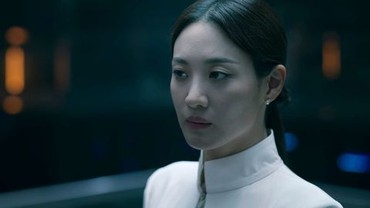
Why is Maeda the way she is? We get all this build-up in season one. We never understand why she wants these experimentations to continue, and it can’t be ‘I hate humans, and they can’t be trusted.’ We needed to understand her villain origin story. What got her to this point? But more importantly, what did Seishin, Chae-Ok’s mother, do to Maeda for her to deserve to be brutalized in the way she was. Even in the last episode, why do you insist on tormenting Tae-Sang? At least tell the man that you love him so he can properly reject you and then start torturing him.
I won’t get into how Kwon Jun-Taek’s grandson took over the role of watching Ho-Jae/Tae-Sang, and we get no backstory. Or the seemingly complicated deal with Baby Creature, characterized as a bad guy initially, then an anti-hero hero, then a bad guy again, to apparently turning into megalomanic and deciding to spread the parasite to everyone in Seoul through bottled drinking water.
All we got were fight scenes and watching Chae-Ok either be slammed into a wall or slam someone into a wall. It was very uneventful. These seven episodes gave us nothing in terms of an interesting character-driven plot.
Characterization: 2/5
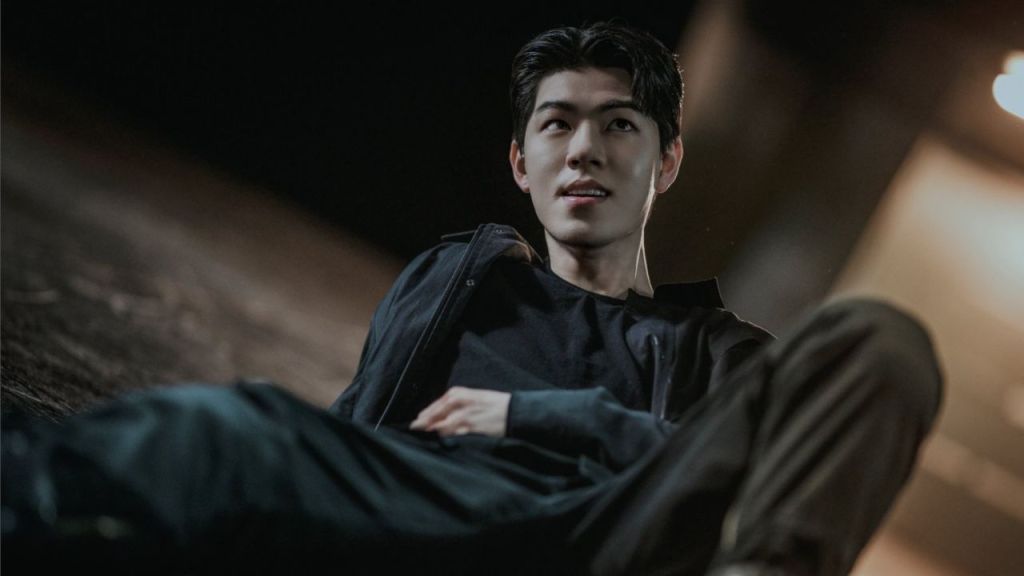
Building on all that was stated before, I will say the characters we had in season one who were in season two were the same, but we didn’t really get to dive into how these events of 1945 shaped and changed them. Tae-Sang became the hero in season 1 after generally staying away from an identity as a revolutionary. He essentially becomes a revolutionary but secretly and apparently to little avail. So we get no depth or understanding of who Tae-Sang has become and why he is Ho-Jae to so many, not Tae-Sang. Lady Maeda’s tendency to cruelty is never explored satisfactorily, and attempting to understand her would have been a great few episodes of the second season. We see her do stuff but never understand why. Chae-Ok has no growth. By the end of season one, she is willing to die for Tae-Sang but then goes back to her moody loner self for the next 79 years. The parasite is also a character, and there is zero exploration into it, just fight scenes. In fact, with all the experimentation on the parasite, it should have technically evolved by now, and some other person should have bumped into the parasite in its natural habitat. It would have been interesting to see a natural parasite vs. the genetically engineered one, but we didn’t get that. Finally, the city itself is a character. The show is called Gyeongseong Creature, implying that there is a creature that lives in old Seoul but also can be used, as I stated, to explore the city that Gyeongseong turned into in the wake of liberation and following the split of the country. A lot has happened to Korea in those 79 years, and all of that could have been considered. Who is the new Gyeongseong Creature? Is it a literal monster or something/someone else?
Overall, I would give season one of Gyeongseong Creature 3 out of 5 trucks of doom, but season 2 gets 2.5 trucks. I would give it a solid 2, but I think the acting was well executed despite the plot.

Let me know what you think. Am I being too harsh on the show?



 They Don't Kiss Until Episode 16
Leave a comment