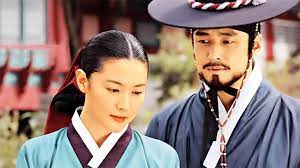
I have finally begun watching dramas for the r/KDRAMA 2024 challenge, and the first drama I decided to watch is Jewel in the Palace.
Now, this is an oldie but a goodie.
I chose to use JITP for challenge number 33, a mid-long form drama, so a drama that is over 20 hours long. There are over 50 episodes of this drama and each episode clocks in at 55-57 minutes long. I could have used this drama for challenge number 35 or 29 but you can only have one drama for each category. Whomp Whomp. But I have some good selections for those categories (see here).
Anyway, Jewel in the Palace premiered on September 15, 2003, and wrapped up on March 23, 2004. When the show aired, Jewel in the Palace was the top program, with an average viewership rating of 45.8%. That means that roughly half of all people who were watching TV during this time when this show aired were watching this show. Safe to say that Jewel in the Palace is a class, and while this drama may be 20 years old, I find the storyline already to be as riveting as any drama I have seen in recent years.
Summary:
Jewel in the Palace, also known as, Dae Jang Geum is a historical drama TV show, or sageuk (a term I just learned a few days ago. Now I know two K-drama-specific terms: sageuk and makjang). The show tells the story of an actual historical figure, Jang-geum, who became the first female Royal Physician in Korean history during the 16th century. Now, if you haven’t seen a historical Korean drama, women in Joseon era Korea had very few rights. In fact, during this time period, women all over the world had limited rights; so, a woman becoming a physician, let alone a physician in the royal court, is quite a feat and already makes for an excellent story.
First Impressions with a First Episode Recap

The episode starts off at the palace with dudes displaying dude-ness and shooting arrows. This one guy does a really good job at shooting his arrow as it lands where it is supposed to land, and the crowd cheers. It breaks just as he is getting ready to pull his arrow out of the board. He also realizes his bowstring is broken, and in the process of shooting the arrow, he hurts his finger and is bleeding. What does that mean you ask? It means something terrible is about to happen.
And it does. Just then, a palace eunuch tells a lieutenant or some other that the king has decided to execute the Deposed Queen Yoon through poisoning, and he and his men must accompany this other official to the Queen’s home and administer this decree. No one wants to do this. And the guy with the broken arrow has to go along, and he doesn’t want to be there either.
Now the lieutenant gets out of the task by stabbing his horse, which causes the horse to throw him, causing him to hurt his ankle. He can’t walk, so he is able to get out of going to kill the queen. Our arrow guy, who is a royal guard, does not get out of the task.
So, to the Queen’s home, they go. She, of course, resists. She is like, I’m not going to take this poison until the King comes himself and tells me this is what he wants. The court official who stated the decree is like, look here, you are going to follow the King’s orders, and he forces the guards, including our main royal guard, to hold her down.
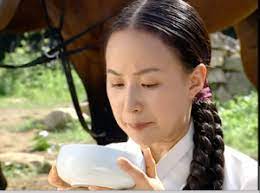
Now, let’s pause here. Who is this queen? According to Wikipedia (lol), her name was Queen Yun of the Haman Yun clan (1455-1482). She was King Seongjong’s second wife. After the King’s first wife died, Lady Yun, originally a concubine of the King, was elevated to his second wife and thusly queen. She gave birth to Seongjong’s heir, Yi Yung, who would become King Yeonsan. It is said that the Queen was very temperamental and jealous of the King’s other concubines. Her jealousy was so intense that she even physically fought the King. Now, ladies, we have all been there, your man is driving you crazy, and you might try to hit or smack him. But that is because your man is a regular Joe of accounting. No matter if he is your bumbling fool of a husband, you cannot lay hands on the king.
The officials are like you need to execute the Queen. King Seongjong decides not to and instead deposes her. But somewhere along the way, he decides she needs to go. Now, according to Wikipedia, King Seongjong’s third wife might have had a hand in her execution. Interestingly, this academic article speculates that Queen Yun was bipolar, and from the description of her behavior, that could be a possibility. Many behaviors that are now scientifically diagnosed were just considered poor behavior or the result of evil spirits, especially in the 15th century. I’ve digressed.
Back to the show.
So they are at the home of the deposed queen, and the court official is telling the guards to hold her down and force her to take the poison. She cusses them all out and tells them she was once the Mother of the Nation and she will not be held down. She takes the poison on her own, coughs up blood into a cloth, and tells her mother (which is so terrible that her mother had to watch her daughter die) to make sure she delivers that cloth to her son, who is a little toddler and doesn’t know what is going on. She then curses everyone there and tells them that the same thing done to her will be done to them, and then she dies.
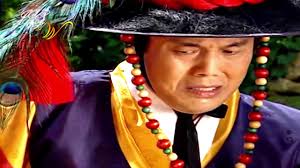
So the royal guard is obviously torn up about the death of the queen and gets drunk and falls down a hill. He wakes up in a cave with some type of mystic who tells him, sir, I’m sorry for you, but your fate is an unlucky one. The royal guard says, why, what’s wrong with my fate?
The mystic tells him that his fate is tied to three women. Now, this is, of course, sexist; just because a man’s fate is tied to three women doesn’t mean that he has a bad fate. Of course, the guard asks for more details. The mystic tells him that the first woman will die; he will save the second woman’s life, but she will die anyway because of him; and the third woman will kill him but, as a result of his death, will save thousands. The guard is like wait, how do I stop this fate?! The mystic is perturbed, which is like, sir, you can’t tell a layperson about their fate in coded terms and be surprised when they ask you to explain.
But he tells the man not to meet any of the women, which is like how am I supposed to not meet any of these women when women are 50% of the population? What exactly do you expect of me? Finally, the mystic writes down the identifiers of these women in code again and disappears. Poof.
The guard makes his way out of the cave to the home of a Buddhist priest who decodes the words. One sheet is a woman whom he met yesterday, which was the Queen. The other is a woman with her head in the river, and the third has something to do with a son.
Look at all this action so far, and we are only 20 minutes into the episode.
Fourteen years later, the Deposed Queen’s son is now the king. The royal guard is almost 40 and has avoided women all these years, not even marrying, and he decides it’s time to leave the royal guard.
Now the scene changes because it can’t be a K-drama if we don’t have fate and paths crossing, my friend.
A lot happened in this episode, so I will post the recap and reaction of the rest of episode 1 in a part two post.




 They Don't Kiss Until Episode 16
Leave a comment